AI tools for NDIS participants are not what most people expect. They are not there to replace support workers, automate care decisions, or reduce disability support to a set of inputs and outputs. Used well, they are a thinking partner, a way to learn at your own pace, organise your thoughts, and feel more confident communicating what you already know.
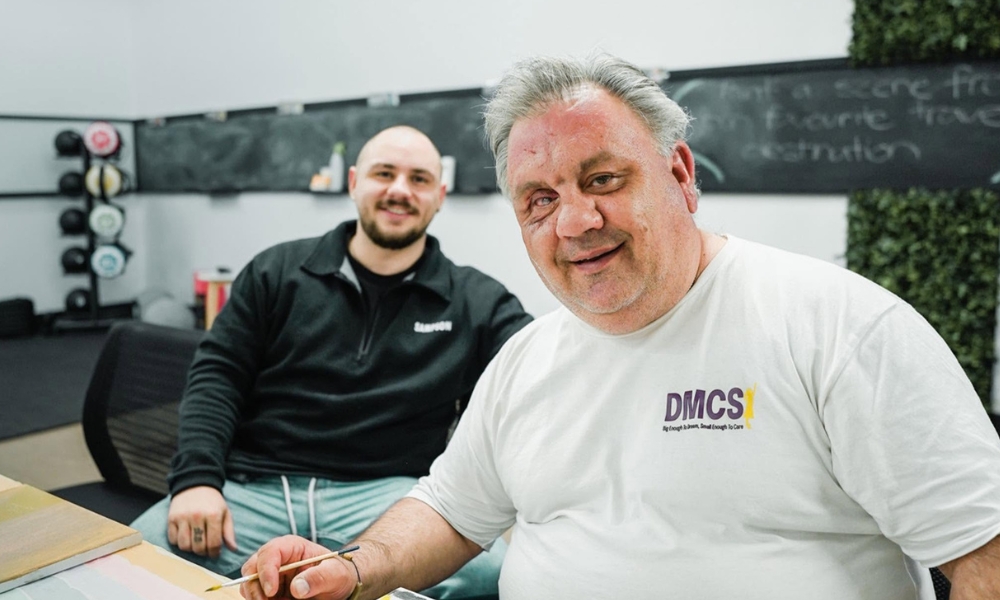
My name is Marco. I am a former participant at Dream Maker Community Services, a registered NDIS provider in Western Sydney. I now work with the Dream Maker marketing team. I have a background in Electronics and Communications Engineering and a strong interest in how technology can support people in the disability sector.
This article is a personal reflection based on my own experience. It is not clinical advice or NDIS policy guidance. Just what I have found useful, and what I think is worth sharing.
When I think about AI, I do not see something that takes over from people. I see something that helps me think. It helps me ask better questions, put my ideas in order, and say what I mean more clearly.
For me, the key thing is understanding what AI can and cannot actually do. It works with the information you give it. It does not know my history, my relationships, or what matters to me day to day. As an NDIS participant, I am not a set of data. I have goals, experiences, and things I am still working out. AI helps me process information, but the human side of my life still needs human understanding.
One of the most useful things about AI is that you can ask anything, as many times as you need, without embarrassment. Sometimes information is written in a way that is hard to follow — a medical report, an NDIS letter, a government website. AI can explain it differently, give you an example, or break it down in plain language. And if you still do not follow, you can ask again. There is no impatience. No judgement.
I use it to check my writing, improve my grammar, and fill in gaps when I am missing something. It is not about getting a finished answer handed to me. It is about getting better at expressing what I already know. The more I practice, the more confident I feel — and the better I get at directing the tool itself. That is a skill in itself.
Something I have started doing is using AI to contribute to the Dream Maker team in a new way. I come up with ideas, research them with AI, and bring talking points into conversations with my colleagues.
That shift has meant something real to me. Instead of only receiving NDIS support, I am contributing — sharing articles, ideas, and a participant's perspective with people who want to hear it. AI tools for NDIS participants can open that kind of door. Not just for daily tasks, but for how you show up and participate in the world around you.
There is a real difference between using AI to do everything for you and using it to help you improve. I always want to understand what AI is giving me. If it suggests an idea, I decide whether it is actually useful. That is how it helps me grow.
Using AI tools for NDIS participants well means staying in control. I am not accepting answers — I am learning to evaluate them. Over time, that means I am asking better questions. That is the actual goal.
AI is good at making complicated things more accessible. It can take a large amount of information and turn it into something manageable — a summary, a plain-language explanation, a short list of what matters.
When I first started using it, the language it gave me was too technical. That is when I learned how to write better prompts. If you tell it the level you want, it adjusts. For me personally, it has been most useful when I am dealing with text that is hard to follow, when I want to prepare for a meeting, or when I want to think something through without waiting for someone else to be free. That last one matters more than people realise.
AI does not know my whole life. It works with what I give it. It does not know my history, my relationships, or what actually matters to me from one day to the next. That is the limit — and it is an important one.
Supporting a person's life means listening, adjusting, and making real judgements. An NDIS participant should not become a number in an automated process. The way I see it: I use AI to learn and prepare. My support team brings the experience, knowledge, and humanity that no tool can replicate. Both have a place. Neither replaces the other.
The NDIS is built around individual goals and human connection. That principle does not change because new technology becomes available.
AI has gone from feeling too complicated and out of reach, to a tool I use regularly and trust to a point. It has helped me explore more, write better, ask sharper questions, and think seriously about how technology can work for people in the disability sector.
The future I want to see is one where AI and people work together properly. Not one replacing the other — both doing what they are actually good at.
Can NDIS participants use AI tools?
Yes. AI tools for NDIS participants are not NDIS-funded supports, but they can be used freely as part of everyday life. Most are free or low cost and available on any device with an internet connection.
What AI tools are useful for NDIS participants?
General-purpose AI assistants are commonly used for reading comprehension, writing support, communication practice, and making complicated information easier to understand. The best one to start with is whichever one you will actually practice using.
Does AI replace NDIS support workers?
No. AI tools can support learning and help with information, but they do not provide the human understanding, relationship, and real-time judgement that support workers bring. They work best alongside people, not instead of them.
How do you start using AI if it feels too complicated?
Start by asking something simple you already know the answer to. Check whether what it says makes sense. Then ask something you are less sure about. The more you practice, the more you learn how to get useful responses from it.
Marco is a former participant at Dream Maker Community Services who now works with the marketing team. He has a background in Electronics and Communications Engineering and a strong interest in AI, technology, and the disability sector. Outside work, Marco enjoys current affairs, gardening, nature walks, healthy eating, and catching up with people.
Looking for the right NDIS support? Dream Maker Community Services is a registered NDIS provider supporting participants across Sydney and Melbourne. Get in touch today or submit a referral.
Disclaimer: This article is a personal reflection based on Marco's own experiences. It does not constitute clinical, legal, or NDIS policy advice. We recommend speaking with a registered support coordinator or disability advocate for advice specific to your situation.
Dream Maker Community Services is an NDIS-registered provider operating across New South Wales and Victoria. We specialise in Supported Independent Living, SDA accommodation, community participation, daily personal activities, life skill development, household support, and assisted transport.
If any of this sounds like what you or someone you love needs, get in touch with our team today. No pressure, no jargon, just a real conversation about how we can help.